
Frameless vs Semi-Frameless Shower Doors: Cost, Longevity, and ROI
If you’re comparing frameless vs semi-frameless shower doors, the real decision comes down to appearance, long-term durability, and getting the right fit in your specific bathroom. Even if your walls aren’t perfectly straight, we take precise measurements, custom-cut the glass, and install it so it aligns properly, seals well, and feels solid every time you use .
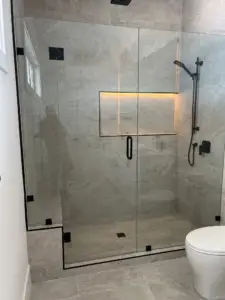
frameless vs semi-frameless shower doors
Quick definitions
Frameless shower doors
Frameless shower doors use thick tempered glass and minimal metal (typically hinges, clamps, and a handle). As a result, you get a clean, open look with fewer visual lines—and fewer crevices to clean.
Semi-frameless shower doors
Semi-frameless shower doors include some framing for structure, with less metal than fully framed doors. In practice, you’ll usually see framing around parts of the unit, but not a full “box” around every edge—so it still looks modern while offering more tolerance.
Cost: what drives the price of frameless vs semi-frameless shower doors
- Door style: hinged vs sliding vs fixed panel + door
- Glass size and thickness
- Hardware quality (hinges, handles, brackets)
- Bathroom conditions: walls not perfectly straight, uneven tile, slope on the curb
- Custom work (notches, angles, tight clearances, special mounting)
In general, frameless costs more up front because it requires thicker glass, stronger hardware, and a more exact installation. However, when you want the most premium look, frameless is usually the top choice.
Longevity: what lasts longer in the real world?
Frameless can last a long time when it’s installed correctly and the hardware is high quality. Ultimately, lifespan comes down to the hardware (hinges/clamps) and the accuracy of the installation (alignment, anchors, and sealing).
Semi-frameless can also hold up very well, and the added framing is often more forgiving in bathrooms that aren’t perfectly square. For that reason, semi-frameless is a smart option when you want a strong upgrade with fewer fit-related headaches.
Maintenance: what you’ll actually deal with weekly
- Cleaning: Frameless is usually faster to wipe down because there’s less metal and fewer crevices.
- Seals: Both styles use sweep seals/gaskets that wear out over time (normal and replaceable).
- Hard water spots: If you have hard water, glass-coating options can reduce buildup and make cleaning easier.
ROI: what’s worth it (and when it’s not)
If you care about resale or a more “high-end” look, frameless often wins because it makes the bathroom feel larger and more modern. That said, the ROI only makes sense if you want that premium look and your space is suitable (or you’re comfortable paying for extra prep and precision).
On the other hand, semi-frameless can be the better value when walls or tile are a little off—it still looks clean, costs less, and is more forgiving while delivering a modern finish.
Which one should you choose?
- Choose frameless if you want the cleanest look and easiest cleaning, and you’re okay paying more for premium hardware and an exact fit.
- Choose semi-frameless if you want a modern upgrade with better value and more forgiveness for walls/tile that aren’t perfect.
Want a quote that’s accurate the first time?
To get an accurate quote, send a few photos of the opening plus rough width/height measurements. Then we can recommend the best option, explain what’s driving the price in your bathroom, and suggest choices that make sense for longevity.
Next, see our shower door services or request a free online quote.
For general glass safety and standards, you can also reference the National Glass Association.